
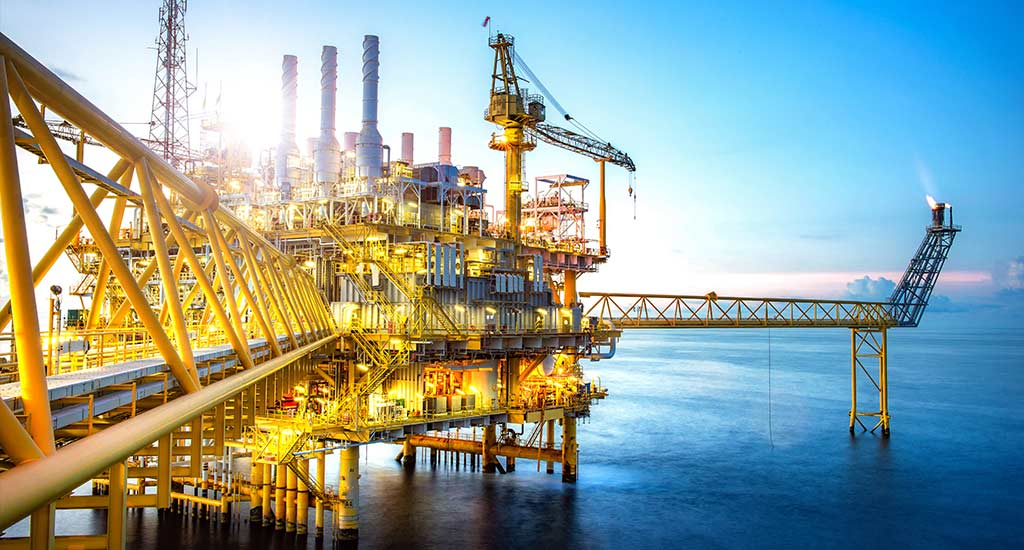
Corrosion is one of the greatest challenges faced by the offshore industry. Marine platforms, refineries, thermoelectric plants, and industrial systems operate continuously exposed to extremely aggressive environments, where factors such as sea spray, high chloride concentration, humidity, thermal variations, and chemical agents significantly accelerate corrosive processes. Improper selection of the tubing used in these systems can compromise operational integrity, raise maintenance costs, and drastically reduce the service life of installations.
Fluid transport systems in offshore applications require materials with high chemical and mechanical resistance, especially in instrumentation, gas, hydraulic, sampling, and critical process lines. In this scenario, 316L stainless steel tubing per ASTM A269 has become one of the leading solutions for severe industrial environments due to its high corrosion resistance and excellent structural stability.
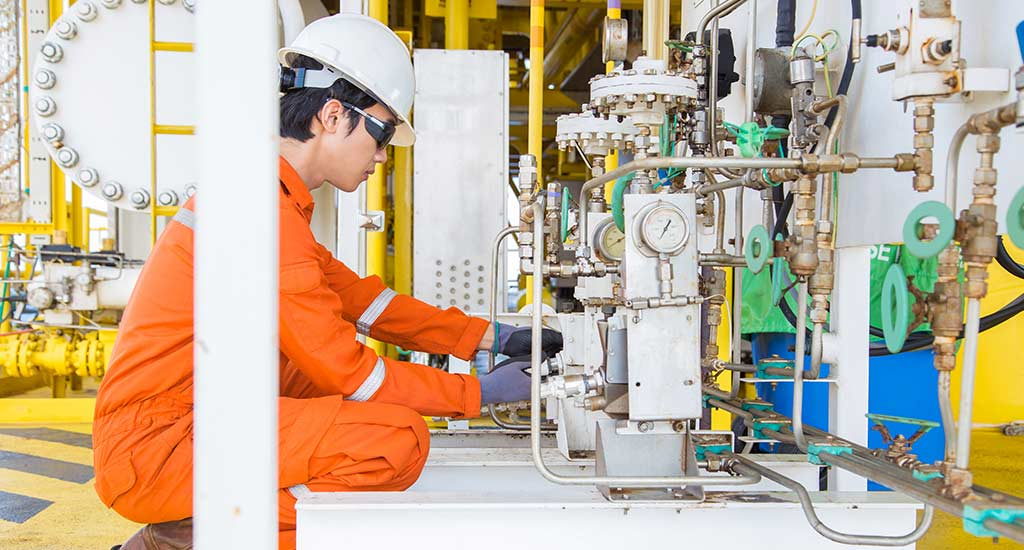
The Offshore Environment and Its Corrosion Mechanisms
The marine environment presents highly aggressive conditions for metals and metal alloys. The constant presence of chlorides from seawater favors corrosive mechanisms such as:
- Pitting corrosion
- Stress corrosion cracking
- Crevice corrosion
- Erosion-corrosion
In addition, offshore applications frequently operate under high pressure, mechanical vibration, thermal cycling, and contact with aggressive fluids containing H₂S, CO₂, and corrosive chemical compounds, further increasing the need for technically suitable materials.
316L Stainless Steel Tubing per ASTM A269
Among the materials most widely used in offshore applications, 316L stainless steel tubing stands out for its combination of corrosion resistance, metallurgical stability, and excellent performance in chloride-rich environments.
Its chemical composition contains key elements such as:

Molybdenum plays an essential role in resistance to localized corrosion, particularly against pitting and crevice corrosion in saline environments. Materials with tightly controlled molybdenum content above 2.5% show superior performance in critical offshore applications.
316L stainless steel also has a low carbon content (“Low Carbon”), reducing the risk of sensitization during thermal processes and preserving the material’s structural integrity over time.
Seamless Tubing: Greater Structural Integrity
In offshore applications, seamless tubing offers important technical advantages over welded tubing.
The absence of a longitudinal weld reduces potential structural weak points and minimizes regions susceptible to localized corrosion, especially under high pressure or in contact with aggressive fluids.
Tubing manufactured per ASTM A269 is widely used in:
- Instrumentation lines
- Hydraulic systems
- Gas lines
- Sampling systems
- High-purity applications
- Offshore and petrochemical environments
In addition, critical applications demand strict dimensional control, refined surface finish, and high material traceability.m rigoroso controle dimensional, acabamento superficial refinado e elevada rastreabilidade do material.
Surface Finish and Corrosion Resistance
Surface finish has a direct influence on tubing performance in offshore environments.
Tubing with polished, BA (Bright Annealed), or EP (Electropolished) finishes has lower surface roughness, reducing points where contaminants can collect and minimizing the onset of corrosive processes.
This high-purity finish provides benefits such as:
- Better resistance to localized corrosion
- Less system contamination
- Easier cleaning
- Greater operational durability
- Better performance in aggressive chemical environments
In critical industrial systems, these characteristics directly contribute to increased operational reliability.
The Importance of Quality and Traceability
In the offshore sector, tubing failures can lead to extremely high operational and financial impacts. For this reason, material traceability and laboratory testing play a fundamental role in ensuring reliability.
Among the main tests applied to high-performance tubing are:
- Chemical analysis by spectrometry
- Mechanical testing
- Hardness testing
- Dimensional control
- Surface inspection
International standards such as ASTM A269, ASTM A370, and ASTM A751 help standardize quality and ensure technical compliance for critical industrial applications.
Conclusion
Offshore corrosion represents a permanent technical challenge for the oil, gas, energy, and industrial process industries. Choosing the right tubing for these systems is decisive in ensuring operational safety, reliability, and reduced maintenance costs.
316L stainless steel tubing per ASTM A269, especially in seamless construction with a high-purity BA/EP finish, offers high corrosion resistance, excellent mechanical performance, and greater durability in severe industrial environments.
In critical applications, investing in tubing with controlled chemical composition, high molybdenum content, refined surface finish, and technical traceability is not just a competitive advantage — it is an operational necessity.