
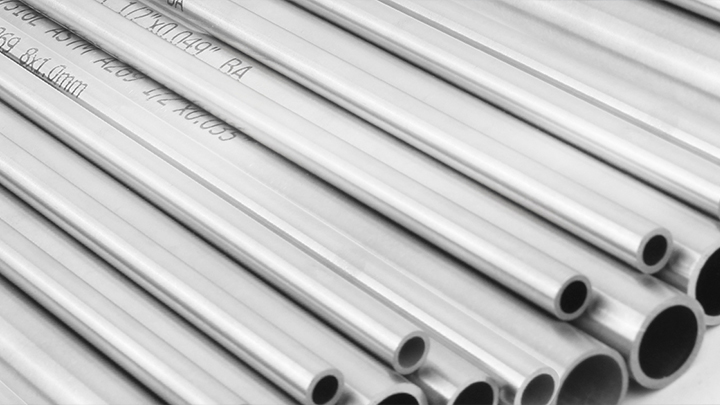
Stainless steel tubing used in critical industrial applications must meet specific requirements for mechanical strength, surface finish, purity, and dimensional control. Among the leading standards used in the market are ASTM A269 and ASTM A270, both widely applied in industrial, sanitary, and high-performance systems.
Although similar in composition and manufacturing, there are important technical differences between ASTM A269 and ASTM A270 tubing, particularly regarding surface finish, end use, sanitary requirements, and inspection processes.
In this article, you’ll learn the main differences between these standards and discover which 316L stainless steel tube is best suited for each industrial application.
What Are ASTM A269 and ASTM A270 Tubing?
Technical Purpose of ASTM A269 in Critical Industrial Applications
The ASTM A269 standard covers the manufacture of seamless or welded stainless steel tubing for general corrosive service and low- or high-temperature applications. It is a specification widely used in industrial sectors that require high mechanical reliability and corrosion resistance.
ASTM A269 tubing is widely used in:
- Industrial instrumentation
- Offshore
- Refineries
- Thermal power plants
- Hydraulic and pneumatic systems
- Analytical lines
- Chemical and petrochemical industries
The primary focus of ASTM A269 is on the material’s structural performance, dimensional control, and metallurgical integrity.
The most common materials are:
- ASTM A269 TP304/L
- ASTM A269 TP316/L
- EN 1.4435
- UNS S31603
In critical applications, using seamless 316L stainless steel tubing provides greater operational safety, better resistance to localized corrosion, and lower risk of leaks.
Companies operating in severe environments typically require tubing with full traceability, controlled chemical composition, and excellent dimensional stability to ensure system safety and service life.
Technical Purpose of ASTM A270 for Sanitary and Pharmaceutical Industries
ASTM A270 focuses on sanitary and high-purity applications, and is widely used in industries such as:
- Pharmaceutical
- Food
- Biotechnology
- Cosmetics
- Dairy
- Beverages
Unlike ASTM A269, ASTM A270 prioritizes internal surface finish, sanitary cleanliness, and microbiological control.
ASTM A270 tubing typically features:
- Polished surfaces
- Low internal roughness
- Bright Annealed (BA) finish
- Electropolished (EP) finish
- Ease of CIP/SIP cleaning
The goal is to prevent particle retention, contamination, and bacterial growth in process systems.
In pharmaceutical and high-purity applications, the surface finish of the stainless steel tube is just as important as its mechanical strength.
Difference Between Industrial and Sanitary Applications
The main difference between ASTM A269 and ASTM A270 lies in the purpose of the application.
While ASTM A269 is geared toward mechanical strength, pressure, and corrosive environments, ASTM A270 is developed for applications that require surface purity and sanitary hygiene.
ASTM A269 — Most used in:
- Offshore
- Refineries
- Instrumentation
- Chemical processes
- Hydraulic lines
ASTM A270 — Most used in:
- Pharmaceutical industry
- Sanitary systems
- Food processing
- Purified water
- High-purity lines
In many cases, both can use 316L stainless steel, but the finish and inspection requirements are completely different.
Technical Differences Between ASTM A269 and ASTM A270
Difference in Internal and External Surface Finish
One of the biggest technical differences lies in the tubing’s surface finish.
ASTM A270 tubing has higher requirements for internal roughness to minimize contaminant-retention points and facilitate sanitary cleaning processes.
The most commonly used finishes are:
BA — Bright Annealed A bright finish achieved through controlled heat treatment in a protective atmosphere.
EP — Electropolished An electropolishing process that reduces micro-irregularities and improves surface cleanliness.
ASTM A269 tubing, on the other hand, typically places greater emphasis on:
- Structural strength
- Dimensional tolerances
- Pressure performance
- Mechanical integrity
In severe industrial applications, a polished external finish also contributes to:
- Less contaminant buildup
- Better surface corrosion resistance
- Premium industrial appearance
- Easier visual inspection
Seamless Construction, Tolerances, and Dimensional Control
Seamless tubing is widely used in critical applications due to its greater structural reliability.
The absence of a weld reduces risks related to:
- Cracking
- Localized corrosion
- Pressure-related failures
- Metallurgical weakness
In addition, industrial applications require:
- Strict dimensional control
- Low ovality
- Concentricity
- Wall uniformity
These factors are essential to ensure proper sealing in instrumentation fittings and industrial fluid systems.
ASTM A269 TP316L tubing manufactured within strict tolerances offers:
- Greater operational stability
- Better pressure performance
- Lower maintenance rates
- Longer service life
Small dimensional variations can directly impact sealing, weldability, and the operational reliability of critical systems.
Testing, Inspection, and Traceability Required Under Each Standard
Both ASTM A269 and ASTM A270 require rigorous inspection and quality control processes.
Key tests applied include:
- Hydrostatic testing
- Chemical analysis
- Dimensional inspection
- Mechanical testing
- Visual inspection
- Batch traceability
Frequently related standards:
- ASTM A370
- ASTM A751
- ASTM E384
In critical industrial applications, it is also common to use:
- PMI (Positive Material Identification)
- XRF spectrometry
- Molybdenum analysis
- Ferrite control
A molybdenum content above 2.5% in 316L stainless steel is an important differentiator for increasing resistance to chloride-induced corrosion, particularly in offshore and marine environments.
Which Standard Should You Choose for Each Application?
When to Use ASTM A269 in Offshore, Refineries, and Instrumentation
ASTM A269 is recommended for industrial applications that require:
- Mechanical strength
- Pressure resistance
- Dimensional stability
- Corrosion resistance
It is widely used in:
- Pneumatic panels
- Hydraulic lines
- Analytical systems
- Offshore platforms
- Refineries
- Thermal power plants
Seamless ASTM A269 316L stainless steel tubing is widely applied in aggressive environments due to its high operational reliability.
When to Use ASTM A270 in Pharmaceutical and Food Processes
ASTM A270 is better suited when the process requires:
- Surface purity
- Sanitary cleanliness
- Low roughness
- Ease of sterilization
Common applications:
- PW/WFI water
- Pharmaceutical industry
- Beverages
- Food
- Biotechnology
Stainless steel tubing with a BA or EP finish is essential to prevent contamination and ensure sanitary compliance.
How to Choose the Ideal Tube to Reduce Failures and Extend Service Life
Choosing the right stainless steel tube directly impacts:
- Operational safety
- System service life
- Maintenance cost
- Reliability
- Process efficiency
When specifying industrial tubing, it is essential to evaluate:
- ASTM standard
- Chemical composition
- Molybdenum content
- Surface finish
- Dimensional tolerances
- Type of application
- Operating environment
Using unsuitable tubing can lead to:
- Premature corrosion
- Leaks
- Contamination
- Operational failures
- High downtime costs
Consulting a technical specialist is essential to determine the best solution based on pressure, fluid, temperature, and application criticality.
Frequently Asked Questions
Can ASTM A269 be used in sanitary applications? Yes, but ASTM A270 is better suited for sanitary applications due to its higher surface finish and microbiological control requirements.
What is the main difference between ASTM A269 and ASTM A270? ASTM A269 has an industrial and structural focus, while ASTM A270 is geared toward sanitary and high-purity applications.
Does ASTM A270 tubing have a better surface finish? Yes. ASTM A270 requires a superior internal finish, with low roughness and easier sanitary cleaning.
Which stainless steel tube is best suited for the pharmaceutical industry? The best choice is typically ASTM A270 tubing in 316L stainless steel with a BA or EP finish.
Can ASTM A269 tubing be used offshore? Yes. ASTM A269 is widely used offshore, in refineries, and in industrial instrumentation systems.
Do BA and EP finishes improve corrosion resistance? Yes. The BA finish, and especially the EP finish, reduce surface irregularities, improving cleanliness and resistance to localized corrosion.
Need technical support for specifying ASTM A269 or ASTM A270 stainless steel tubing? Fluirelok provides 316L stainless steel tubing solutions for critical industrial applications, offshore, instrumentation, and high-purity systems, with a focus on traceability, premium finishing, and international compliance.